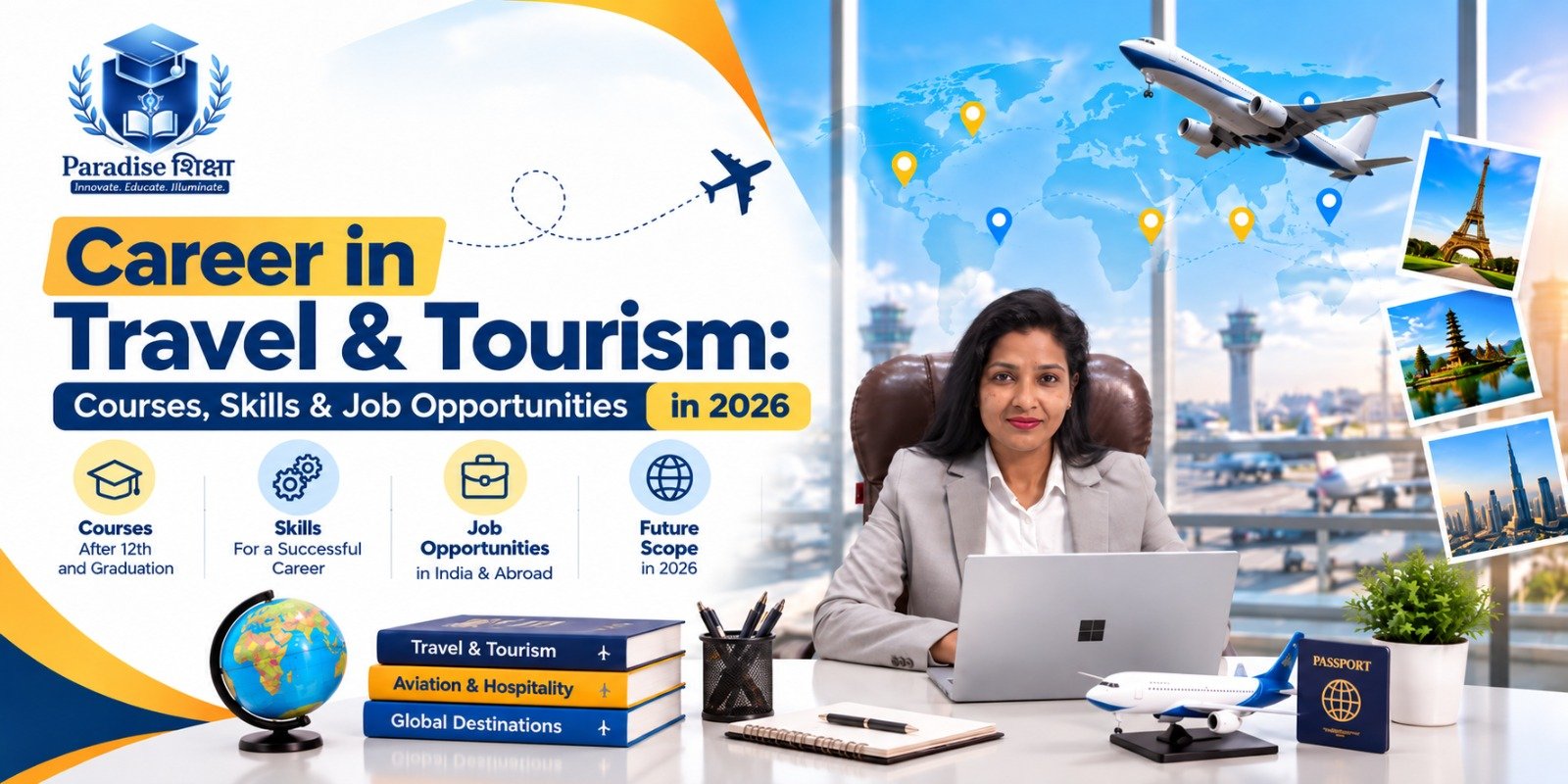
The travel and tourism industry has changed significantly in recent years. Today, it is not limited to travel agencies and tour operators. The sector includes airlines, airports, hotels, online travel companies, corporate travel, destination management, and travel technology.
For students who enjoy communicating with people, exploring destinations, and working in a dynamic environment, a career in travel and tourism can offer several career pathways after Class 12.
Why Choose a Career in Travel and Tourism?
Travel and tourism is a people-focused industry with opportunities across different types of businesses. According to the World Travel and Tourism Council, Travel and Tourism contributed $263.6 billion to India’s economy in 2025 and supported 46.2 million jobs. The organisation expects the sector to contribute $286.1 billion to India’s economy in 2026. (WTTC)
The industry is also becoming increasingly digital. Travellers now use websites, apps and online platforms to research destinations, compare travel options and make bookings. This has created demand for professionals who understand both traditional travel operations and digital tools.
Career Options After a Travel and Tourism Course
Students can explore different roles depending on their interests and training.
Travel Consultant
A Travel Consultant helps customers plan their trips according to their destination, budget, preferences, and schedule. The role can involve recommending destinations, creating travel itineraries, comparing flights and accommodation, arranging bookings and explaining travel requirements. Travel Consultants also communicate with customers before and during their journey and may assist with changes, cancellations, or other travel-related issues.
Ticketing Executive
A Ticketing Executive handles airline booking and ticketing activities. Their responsibilities can include checking flight schedules, availability and fares, making reservations, issuing tickets and processing changes or cancellations according to airline and fare rules. Accuracy is particularly important because passenger details, travel dates, and ticket conditions need to be entered correctly. Knowledge of airline reservation systems and GDS platforms can be useful for this role.
Reservation Executive
A Reservation Executive manages bookings for travel-related services such as flights, hotels, tours and other travel products. They check availability, confirm reservations, update booking information, and communicate booking details to customers. The role may also involve handling amendments, cancellations, and customer requests. Strong computer skills, attention to detail, and good communication are important for reservation-related work.
Tour Executive
A Tour Executive helps plan and coordinate tour packages from the initial booking to the completion of the trip. Responsibilities may include preparing itineraries, coordinating with hotels, transport providers and local suppliers, communicating with travellers and ensuring that planned services are delivered as expected. Tour Executives may also assist with group travel and resolve issues that arise during a tour.
Travel Coordinator
A Travel Coordinator manages travel arrangements for individuals, groups or organisations. In corporate travel, the role may involve coordinating flights, hotels, transportation, schedules and changes for employees or business travellers. Travel Coordinators need strong organisational skills because they may manage multiple bookings and schedules at the same time while ensuring that travel plans remain accurate and within the required budget.
GDS Executive
A GDS Executive works with a Global Distribution System, a technology platform used by travel professionals to access information such as flight schedules, availability and fares and to support reservations and ticketing. GDS professionals may search for suitable flight options, check availability, create or modify bookings and assist with ticketing processes. Practical GDS training can be particularly useful for students interested in airline ticketing, travel agencies and reservation operations.
Customer Service Executive
A Customer Service Executive assists travellers before, during and after their journey by handling enquiries, bookings, changes and other travel-related requirements. The role may involve answering questions about flights, hotels, packages, schedules and travel services, as well as helping customers with cancellations, rescheduling and booking-related issues. Customer Service Executives may communicate with customers through phone, email, chat, or in person. Strong communication, patience, problem-solving, and customer handling skills are important for this role, particularly when assisting travellers with urgent or unexpected changes to their plans.
What Skills Do Travel Professionals Need?
A successful career in travel requires more than knowing about popular destinations. Students should develop a combination of technical and interpersonal skills. Few of them are listed below.
Communication: Communication is one of the most important skills in the travel industry. Travel professionals regularly interact with customers, airlines, hotels, transport providers and tour operators. They need to explain travel options clearly, understand customer requirements and provide accurate information about bookings, schedules, fares, and travel services
Computer Skills: Travel operations are increasingly dependent on computers and digital platforms. Professionals may use reservation systems, booking platforms, email, online travel portals, and customer management software as part of their daily work. Students should be comfortable using computers, searching for information online, managing digital records, and working with different software systems. Basic knowledge of spreadsheets and online communication tools can also be useful in many travel-related roles.
GDS Knowledge: GDS platforms allow travel professionals to access information such as flight schedules, availability, and fares and support reservation and ticketing activities. Practical training can help students understand how to search for flights, check availability, create bookings, and manage reservation-related processes.
Customer Service: Customers may have questions about flights, hotels, itineraries, cancellations, changes, or travel arrangements. A good travel professional should listen carefully, communicate politely, and provide practical solutions. Patience and professionalism are particularly important when dealing with customers who are facing delays, cancellations, or other unexpected travel problems.
Destination Knowledge: Understanding destinations, connectivity, travel seasons, and accommodation options helps professionals assist customers more effectively. Destination knowledge allows professionals to create more suitable itineraries and provide useful recommendations based on a customer’s budget, interests, and schedule.
Problem Solving: Travel plans can change at any time. Flights may be delayed or cancelled, customers may need to change bookings, and hotels or transportation arrangements may require last-minute adjustments. Travel professionals need to remain calm, understand the situation, and identify practical alternatives. Strong problem-solving skills can help them manage unexpected situations while maintaining a positive customer experience.
What Can You Study After Class 12?
Students can choose from different travel and tourism programs depending on their career goals. Popular areas include:
- Diploma in Travel & Tourism Management
- Diploma in Multi-GDS Travel Technology
- Certificate in MICE Tourism
- Advanced Diploma in Travel & Tourism Management
- Certificate in Travel Blogging & Influencer Business
- Certificate in Medical & Wellness Tourism
- Certificate in Amadeus GDS & Airline Ticketing
- Certificate in Adventure & Eco Tourism
Start Your Travel Career With Practical Training
For students planning a career in travel and tourism, choosing the right training can help build a strong foundation in both industry knowledge and practical skills. Understanding how ticketing, reservations, travel agency operations, and itinerary planning work can make it easier to prepare for entry-level roles in the travel industry.
Paradise Shiksha offers Travel, Tourism and GDS Management courses designed around important areas of travel operations, including international ticketing, travel agency operations, itinerary planning and GDS.
The training also focuses on skills that are useful across different travel-related roles, such as communication, customer service, computer skills and professional development. These skills can be relevant for students considering careers as Travel Consultants, Ticketing Executives, Reservation Executives, Tour Executives, Travel Coordinators and GDS Executives.
Students considering a career in travel and tourism can explore the course structure at Paradise Shiksha to understand the subjects covered, practical training involved, and the skills they can develop during the program.
The right course should match your career interests and provide relevant practical knowledge. Before making a decision, students should review the curriculum, training methodology, GDS and ticketing components, practical exposure, and career guidance offered by the institute.
For students interested in building a foundation in travel, tourism, airline ticketing and GDS, structured training can be a useful starting point for understanding how the travel industry operates and preparing for future career opportunities.