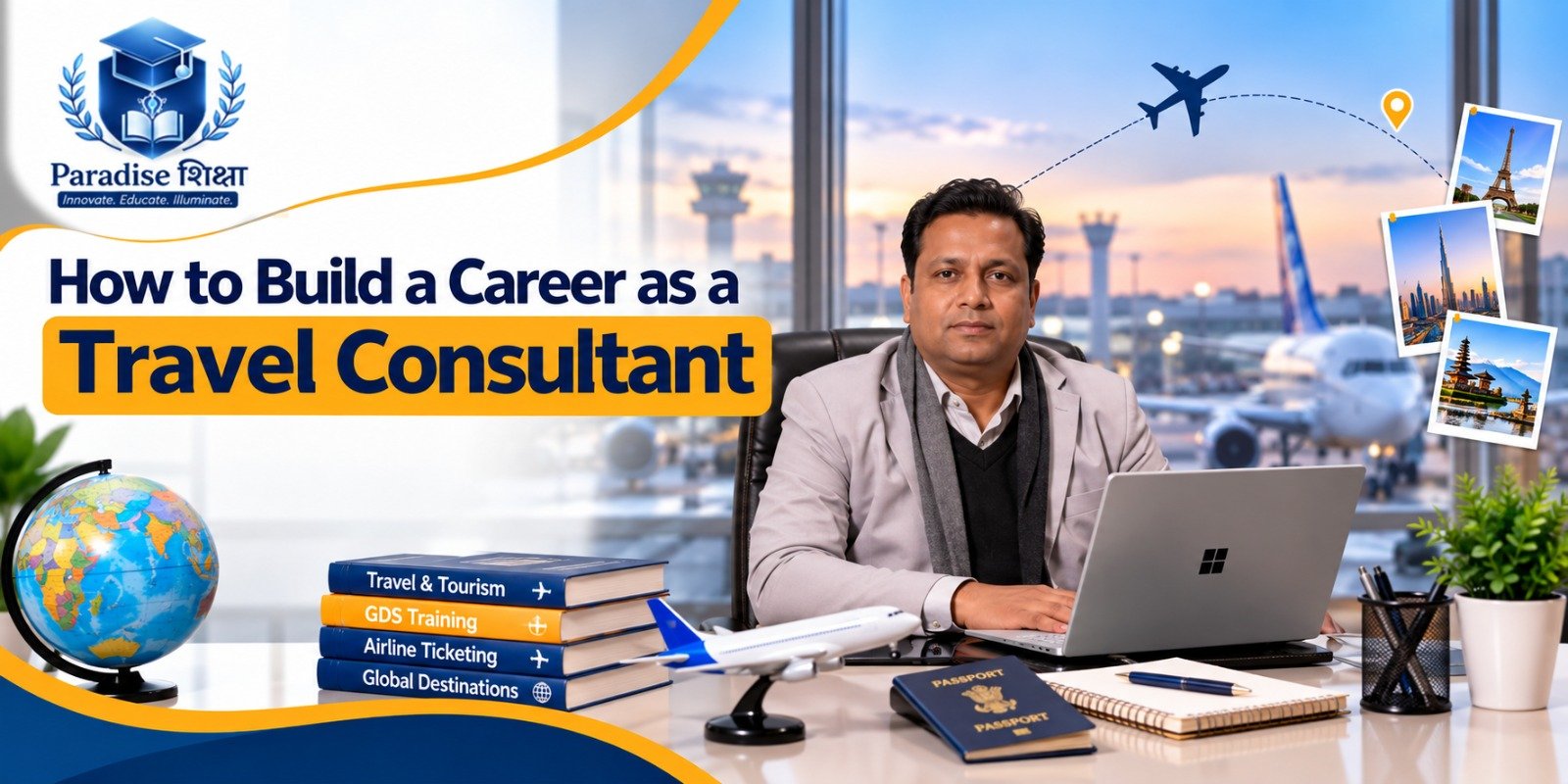
A career as a Travel Consultant or Travel Executive can be an interesting option for students who enjoy travel, communication, planning and working with people. While travelling may be the attraction that first brings students to the industry, professional travel careers involve much more than knowing about destinations.
Travel professionals work with customers, airlines, hotels, tour operators and travel service providers to plan and manage travel arrangements. Building a successful career therefore requires a combination of travel knowledge, practical training and professional experience.
Start With the Right Travel and Tourism Course
For students planning to enter the travel industry after Class 12, the first step is to understand the different areas of travel operations.
A Travel and Tourism course can introduce students to subjects such as travel agency operations, airline ticketing, international travel, reservations, itinerary planning and tourism services.
When selecting a course, students should look beyond the course title and review the actual curriculum. Practical exposure to travel booking processes, ticketing and reservation systems can be particularly useful for students preparing for their first job.
Learn Airline Ticketing and Reservations
Ticketing and reservations are important parts of many travel operations. A student interested in becoming a Travel Consultant or Travel Executive should understand how flight searches, availability, fares, reservations and ticketing procedures work.
Learning these processes can help students understand how a customer’s travel requirement is converted into an actual travel arrangement.
International ticketing can also introduce students to different fare conditions, travel routes and booking requirements, providing a broader understanding of professional travel operations.
Develop GDS Knowledge
Technology plays an important role in modern travel businesses. Travel professionals use reservation and distribution systems to access information and manage travel bookings.
Learning a Global Distribution System, or GDS, can therefore be a useful part of travel industry training. Students can become familiar with concepts such as availability, fares, PNR, itinerary information and reservation procedures.
Practical GDS training can help learners understand the technology behind professional travel bookings rather than simply learning how to make bookings through consumer travel websites.
Learn to Create Travel Itineraries
A Travel Consultant needs to understand how different parts of a journey fit together.
An itinerary can include flights, accommodation, transportation, activities and other travel arrangements. Students can develop practical knowledge by learning how to organise these elements according to a traveller’s destination, schedule and requirements.
For example, an international itinerary may require coordination between multiple flights, different destinations and accommodation arrangements. Understanding how these components connect can be valuable when assisting customers.
Gain Practical Experience
Classroom learning provides the foundation, but practical experience can help students become more comfortable with real travel operations.
Students can look for internships, entry level positions or practical training opportunities with travel agencies, tour operators, travel management companies and other travel businesses.
Working in a real environment can expose students to customer enquiries, booking procedures, itinerary changes and the everyday challenges involved in travel operations.
Understand Customer Requirements
A Travel Consultant does not simply sell a flight or holiday package. The professional needs to understand what the customer actually wants.
A family travelling for a holiday may have different requirements from a business traveller or a student planning international travel.
Learning to ask the right questions about budget, destination, travel dates, preferences and schedule can help professionals recommend more suitable travel options.
Build Your Professional Knowledge
The travel industry continues to change, so learning should not stop after completing a course.
Travel professionals can continue developing their knowledge of destinations, airline services, travel technology, booking systems and industry practices.
Keeping up with new travel products and understanding changing customer expectations can also help professionals become more confident in their work.
Start Your Travel Career With Paradise Shiksha
Paradise Shiksha offers Travel, Tourism and GDS Management training covering areas such as international ticketing, travel agency operations, itinerary planning and GDS.
For students interested in becoming a Travel Consultant or Travel Executive, structured training can provide an introduction to the practical processes used within the travel industry.
Students can explore the course curriculum, understand the areas covered and choose training based on their individual career interests.
Conclusion
Building a career as a Travel Consultant or Travel Executive is a gradual process. Students can start by choosing relevant travel education, learning ticketing and reservation processes, developing GDS knowledge and gaining practical exposure.
The most useful approach is to combine travel knowledge with practical training and real industry experience. With continuous learning and professional development, students can build a foundation for a career in the changing travel and tourism industry.